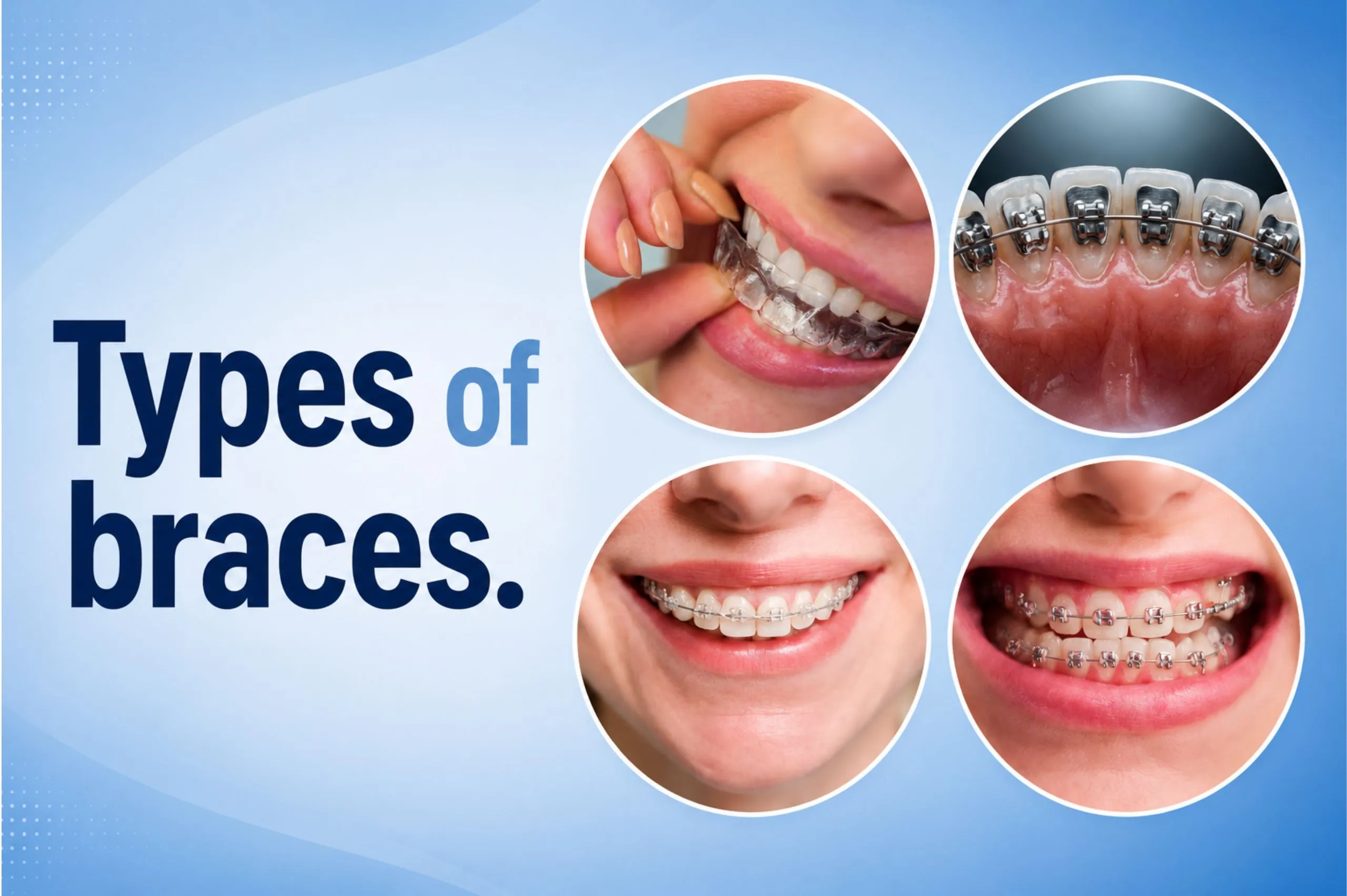
If you have crooked, crowded, spaced, or misaligned teeth, dental braces can help improve tooth alignment and bite. Today, patients have several orthodontic treatment options, including metal braces, ceramic braces, lingual braces, self-ligating braces, and clear aligners such as Invisalign.
The best type of braces depends on your dental condition, treatment goals, oral health, and orthodontist’s assessment. Here we have listed the top 5 dental braces, their benefits, and when you can use them.
Table of Contents
What Are Teeth Braces?
Dental braces are orthodontic appliances used to gradually move teeth into better positions and correct bite problems. Traditional braces use brackets attached to the teeth and an archwire that applies controlled pressure over time. Clear aligners use a series of custom-made trays to gradually move the teeth.
Orthodontic treatment can address problems such as crowded teeth, gaps, crooked teeth, overbite, underbite, crossbite, and other forms of malocclusion.
Different Types of Dental Braces
There are several types of orthodontic appliances, including the five options discussed in this guide. These are:
1. Metal Braces
Metal braces are fixed orthodontic appliances that use metal brackets and an archwire to gradually move teeth into better positions. They are one of the most established orthodontic treatment options and can be used for a wide range of alignment and bite problems.
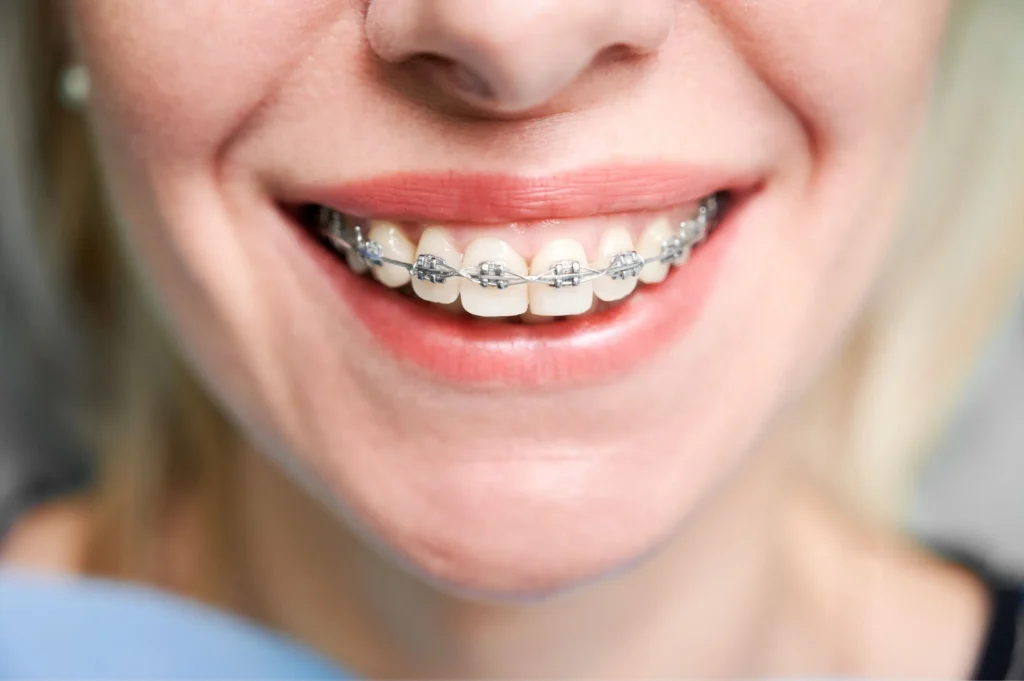
Benefits of metal braces:
- Suitable for mild to complex orthodontic cases.
- Can correct crowded, crooked, and spaced teeth.
- Can be used to improve bite problems such as overbite, underbite, and crossbite.
- Fixed to the teeth, so patients do not need to remember to remove or replace them.
- Usually more affordable than some less visible orthodontic options.
Recommendations:
An orthodontist may recommend metal braces when a patient needs predictable tooth movement or has a more complex alignment or bite problem. They can provide precise control over tooth movement throughout treatment.
Who may need metal braces?
Patients with significant crowding, rotated teeth, gaps, or certain bite problems may benefit from fixed braces. However, the appropriate appliance depends on the patient’s individual orthodontic assessment rather than symptoms alone.
2. Ceramic Braces
Ceramic braces work in a similar way to metal braces but use tooth-colored or clear brackets, making them less noticeable. They are a fixed orthodontic treatment and can be used for many of the same alignment problems as traditional braces.
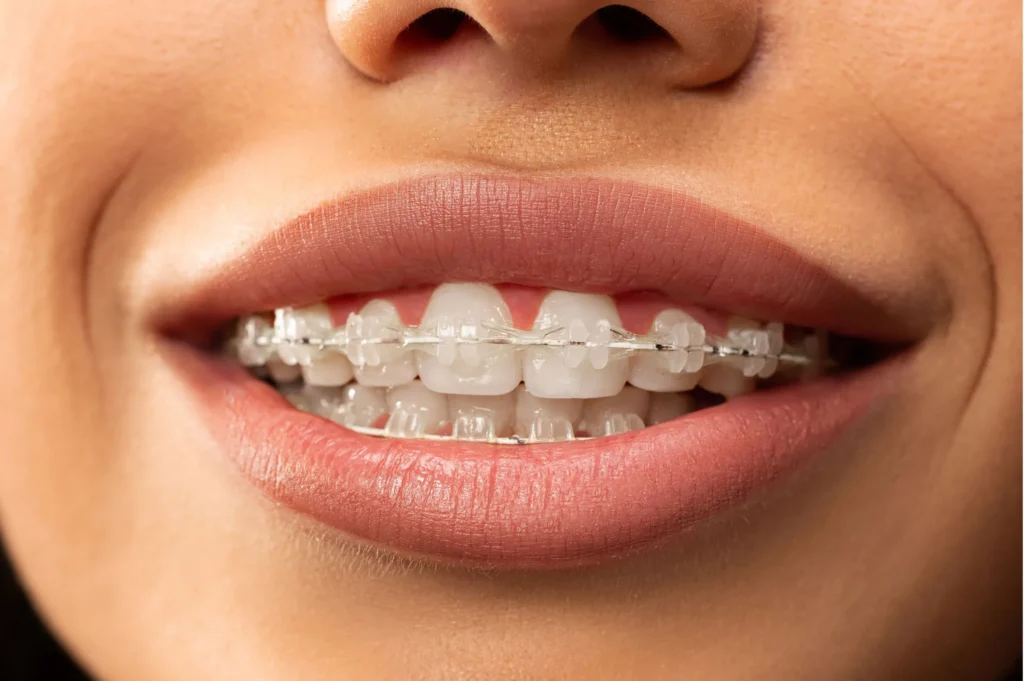
Benefits of ceramic braces:
- Less noticeable than conventional metal brackets.
- Can treat many common orthodontic problems.
- Fixed to the teeth throughout treatment.
- Provide controlled tooth movement.
- May be preferred by teenagers and adults who are concerned about the appearance of braces.
Recommendations:
Ceramic braces may be recommended when a patient wants a less noticeable fixed appliance and their orthodontic condition is suitable for this type of bracket.
Important considerations:
Ceramic brackets may be more prone to fracture than metal brackets. They may also be more expensive than conventional metal braces. Good oral hygiene is particularly important because plaque can accumulate around brackets and wires.
3. Lingual Braces
Lingual braces are fixed braces attached to the inner, or tongue-facing, surfaces of the teeth. Because the brackets are positioned behind the teeth, they are largely hidden when you smile.
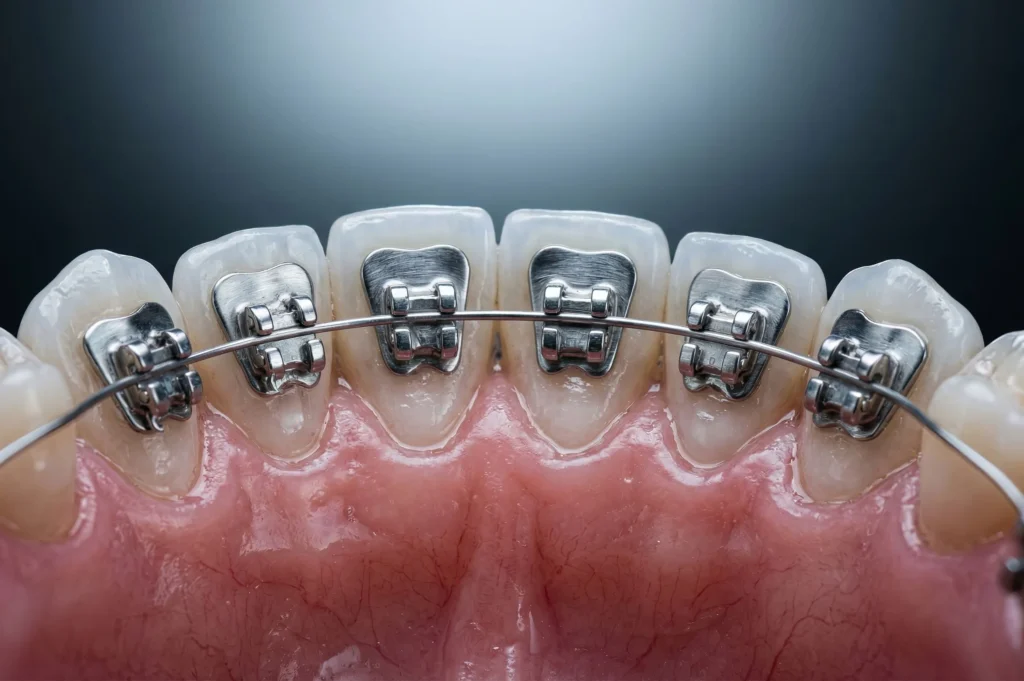
Benefits of lingual braces:
- Very discreet because they are positioned behind the teeth.
- Can provide fixed orthodontic treatment without visible brackets on the front surfaces.
- Can be used to correct many alignment and bite problems.
- Remain attached to the teeth, so compliance does not depend on remembering to wear an appliance.
- May be suitable for adults who want a less visible orthodontic option.
Orthodontist Recommendations:
They may be considered when appearance is a major concern and the patient’s orthodontic condition can be treated effectively with a lingual system.
Important considerations:
Lingual braces require specialized training and treatment planning. They may initially affect tongue comfort or speech and can make cleaning more difficult. They can also cost more than conventional braces because of their specialized design and placement.
4. Self-Ligating Braces
Self-ligating braces use brackets with a built-in clip or door to hold the archwire instead of traditional elastic ligatures. They may be made from metal or, in some systems, ceramic materials.
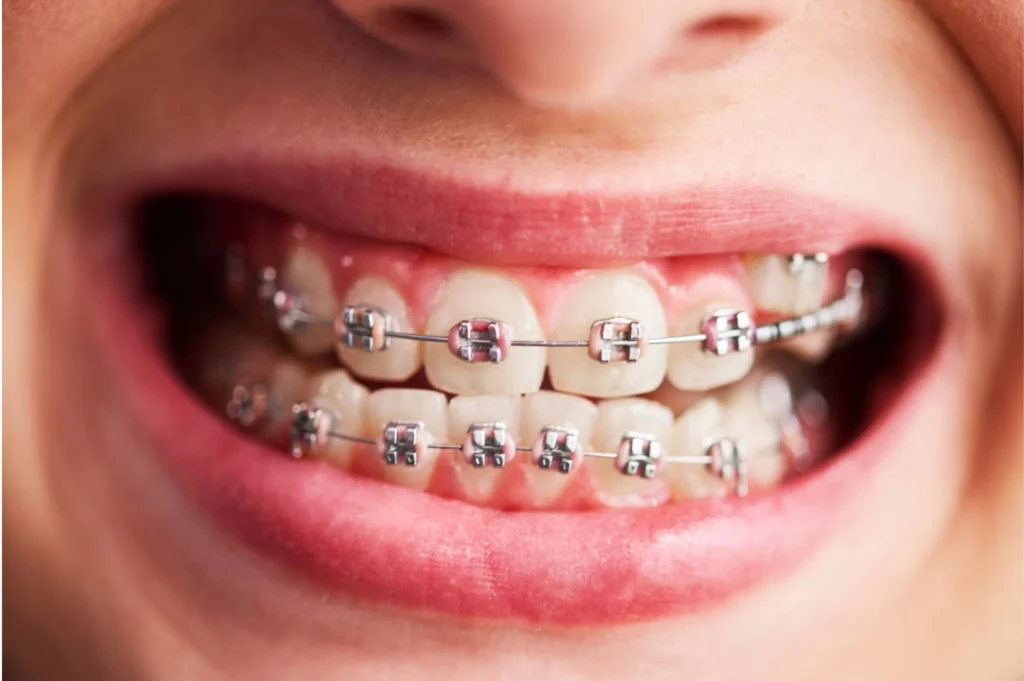
Benefits of self-ligating braces:
- Do not require traditional elastic ligatures to hold the archwire.
- Can be used for many of the same orthodontic problems treated with conventional fixed braces.
- May make some appointments simpler because the wire can be changed without replacing elastic ligatures.
- Available in less noticeable ceramic versions in some systems.
- Provide orthodontists with another fixed-appliance option when planning tooth movement.
Recommendations:
An orthodontist may select a self-ligating system based on the patient’s treatment requirements and the orthodontist’s preferred treatment technique.
An important fact: Self-ligating braces should not automatically be considered faster or more effective than conventional braces. Evidence does not consistently show that they produce substantially shorter overall treatment times. The treatment plan and individual case are more important than the bracket mechanism alone.
5. Invisalign and Clear Aligners
Invisalign and clear aligners are a series of removable, transparent trays designed to gradually move teeth according to a planned orthodontic treatment. Invisalign is one brand of clear aligner system.
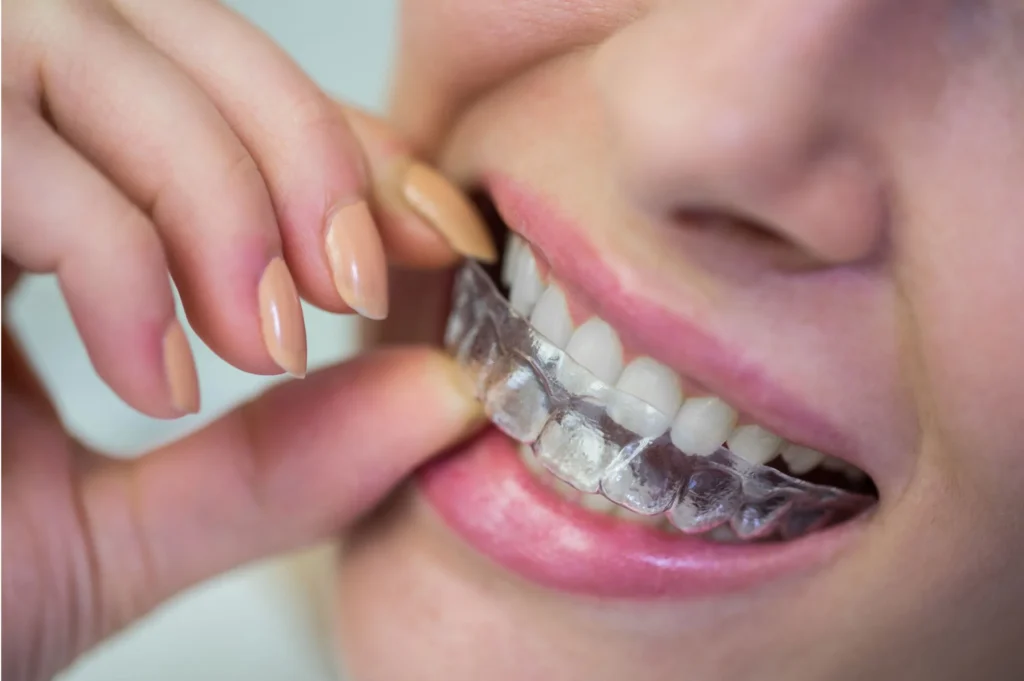
Benefits of clear aligners:
- Less noticeable than conventional braces.
- Removable for eating, brushing, and flossing.
- No metal brackets or archwires.
- Can be convenient for patients who want a discreet treatment option.
- Digital treatment planning may allow patients to preview the planned movement of their teeth.
Recommendations:
Clear aligners may be suitable for selected cases involving crowded, spaced, or otherwise misaligned teeth. They can be particularly attractive to adults and teenagers who prefer a discreet and removable treatment option.
Important considerations:
Clear aligners are not suitable for every orthodontic problem. More complex tooth movements or significant bite problems may require fixed braces or other orthodontic techniques. Because aligners are removable, patient compliance is essential. They generally need to be worn for most of the day, according to the orthodontist’s instructions.
Which Type of Braces Is Best?
There is no single type of braces that is best for every patient. The appropriate dental braces treatment depends on the patient’s tooth alignment, bite, oral health, treatment goals, age, lifestyle, and the complexity of the case.
In Pakistan, all five options may be available through orthodontic and dental clinics, but availability, treatment fees, and the orthodontist’s experience with a particular system can vary between clinics and cities.
Why Are Braces Necessary?
Braces may be recommended when teeth or jaws do not align properly. Correcting these problems can improve biting, chewing, speech, oral hygiene, and overall dental function. Properly aligned teeth may also be easier to clean, helping support long-term oral health.
However, not everyone needs braces. An orthodontist should first evaluate your teeth, bite, gums, and overall oral health before recommending treatment.
What Symptoms or Problems Should You Consider?
Common signs that may indicate a need for an orthodontic assessment include:
- Crowded or overlapping teeth
- Noticeable gaps between teeth
- Crooked or rotated teeth
- Difficulty biting or chewing properly
- Upper and lower teeth not meeting correctly
- Excessive overbite or underbite
- Crossbite
- Teeth that are difficult to clean because of their position
- Jaw discomfort or difficulty with normal jaw function
These signs do not automatically mean that braces are required. An orthodontist needs to examine the teeth, bite, jaws, and overall oral health before determining whether orthodontic treatment is appropriate and which appliance is most suitable.
How Much Do Braces Cost?
The cost of braces depends on the type of appliance, complexity of the dental problem, treatment duration, and the orthodontic clinic. Generally, the cost of braces in Lahore is estimated to range from PKR 80,000 to PKR 450,000. Metal braces are generally more affordable than some aesthetic options, while lingual braces and clear aligners may have higher costs.
Different reasons affecting cost of dental braces include:
- Geographic Location: The cost of braces can vary by city, region, and country. Differences in clinic operating costs, local market conditions, and availability of orthodontic services can affect treatment fees.
- Orthodontist’s Experience and Qualifications: The orthodontist’s training, qualifications, and level of experience may influence professional fees. Specialists with advanced training and extensive experience may charge higher fees for orthodontic treatment.
- Insurance Coverage: If your dental insurance plan includes orthodontic benefits, it may cover part of the cost of braces, subject to the policy’s terms, limits, age restrictions, and exclusions. The remaining amount is usually paid by the patient. Not all dental insurance plans cover orthodontic treatment, so it is important to confirm your coverage before starting treatment.
- Severity and Complexity of the Dental Problem: The complexity of your orthodontic condition can affect the overall cost of treatment. More complex cases, such as significant crowding, severe bite problems, or impacted teeth, may require additional procedures, longer treatment times, or more frequent appointments, which can increase the total cost.
Which is the Best Dental Clinic for Teeth Braces in Lahore?
Choosing the best dental clinic for teeth braces in Lahore depends on the orthodontist’s qualifications, experience, treatment options, diagnostic process, and the complexity of your case. International Dental Hub dental clinic in Lahore, provides orthodontic and clear-aligner treatment options, with a team that includes dentists with orthodontic training and experience.
At International Dental Hub, we offer personalized orthodontic assessment to determine whether metal braces, ceramic braces, self-ligating braces, or clear aligners are appropriate for your teeth and bite.
Conclusion
There are several types of braces, and each has different advantages and limitations. Metal, ceramic, lingual, self-ligating braces, and clear aligners can all be useful depending on the patient’s orthodontic needs.
Disclaimer: The best braces for you can only be determined after a professional orthodontic evaluation. If you are considering braces in Lahore, consult the dental team at International Dental Hub to discuss your teeth, bite, treatment options, and expected cost.
Frequently Asked Questions
What is the best age for braces?
There is no single “best” age for braces because treatment timing depends on the child’s dental development and orthodontic problem. The American Association of Orthodontists recommends an orthodontic check-up by age 7, while many patients begin active treatment between ages 9 and 16 when appropriate. Adults can also successfully receive orthodontic treatment.
What are the 5 stages of braces?
Braces treatment can generally be described in five stages: orthodontic assessment and treatment planning, placement of braces, active tooth movement with regular adjustments, removal of braces, and retention. The exact process and duration vary depending on the patient’s teeth, bite, and treatment plan.
Do braces make teeth 100% straight?
Braces can significantly improve tooth alignment and bite, but 100% perfect straightness cannot be guaranteed. The final result depends on the individual’s anatomy, treatment complexity, biological response, and compliance with treatment and retainer instructions.
Do braces cause permanent change?
Braces create a lasting change in the position of the teeth, but teeth are not permanently fixed in place after treatment. Teeth can naturally shift over time, which is why retainers are an essential part of maintaining the results.
Will teeth move 10 years after braces?
Yes. Teeth can continue to shift years or even decades after orthodontic treatment, because tooth position naturally changes throughout life. Wearing retainers as recommended by your orthodontist helps reduce unwanted movement and maintain your alignment.