Missing a tooth affects how you eat, speak, and feel. International Dental Hub offers world-class dental implants in Lahore that look and feel like your natural teeth.
A dental implant is a small titanium post placed into your jawbone. It acts as an artificial tooth root. Once it fuses with the bone, a crown is placed on top, giving you a strong, natural-looking tooth. It's the most trusted long-term solution for missing teeth available today.
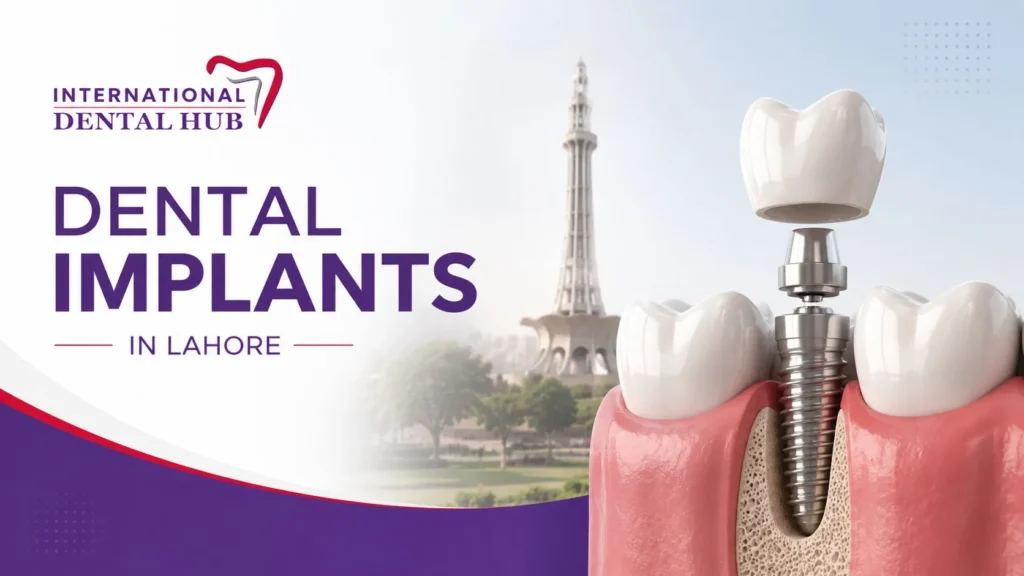
Implant selection is never one-size-fits-all. At the International Dental Hub, your implantologist evaluates your bone volume, bone density, number of missing teeth, and overall systemic health before recommending the right implant system.
Endosteal Implants (Root-Form) Endosteal implants are the most widely used type, accounting for over 90% of all implant procedures. These are screw-shaped titanium or zirconia fixtures placed directly into the alveolar bone. They are the gold standard for patients with adequate bone height and width. Each implant supports a single crown, a bridge, or part of a full-arch prosthesis.
Subperiosteal Implants Subperiosteal implants are positioned on top of the jawbone, under the gum tissue, rather than inside the bone. They rest directly on the bone under the periosteum and are secured with fixation screws, making them suitable for patients with severe bone atrophy where endosseous implants are not feasible. Modern subperiosteal implants are now custom-designed using 3D digital imaging and precision fabrication for a better fit.
Zygomatic Implants Zygomatic implants are an advanced solution designed for complex cases involving severe bone loss in the upper jaw. Unlike conventional implants anchored in the jawbone, zygomatic implants are much longer and secured into the zygomatic bone (cheekbone), which typically remains dense and strong even when significant jawbone deterioration has occurred.
All-on-4 / All-on-6 (Full-Arch Rehabilitation) This protocol uses four or six strategically angled endosteal implants to support a complete fixed arch of prosthetic teeth. The posterior implants are tilted to optimize stability and allow patients with posterior bone loss to receive a permanent, functional prosthetic solution — often without the need for bone grafting. It is a clinically proven solution for patients with most or all teeth missing.
Single Tooth Implant A single endosteal implant with a custom abutment and crown replaces one missing tooth without involving or grinding down adjacent healthy teeth — a critical biological advantage over traditional bridgework.
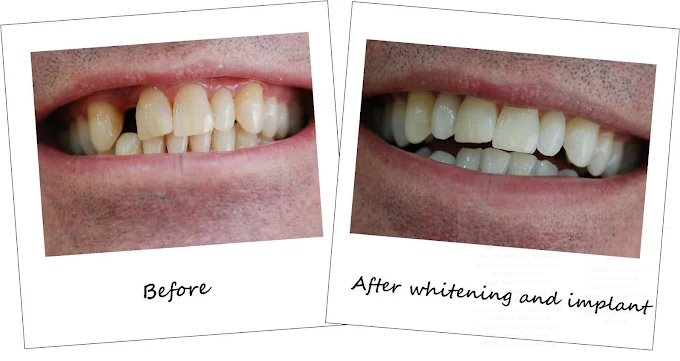
Here are the real patient results of our dental implant treatment in Lahore.
Our dental implants in Lahore benefit you in the following ways.
Successful long-term implant outcomes depend on an intricate combination of pre-, trans-, and post-operative steps, including pre-operative planning, assessment of bone tissue, soft tissue management, implant positioning, prosthetic rehabilitation, and long-term maintenance follow-ups. Here is exactly how we carry it out:
Step 1: Comprehensive Diagnostic Workup (CBCT & Clinical Assessment) Your treatment begins with a full clinical examination and a Cone Beam Computed Tomography (CBCT) scan. This 3D scan allows the clinician to assess present bone volume, chart out nerve locations and sinus cavities, and determine whether the implant site is feasible without grafting. Bone quality is classified, and a digital surgical plan is created before a single instrument touches the mouth.
Step 2: Site Preparation (Bone Grafting if Required) If the CBCT reveals insufficient bone volume, a bone graft procedure is performed first. Graft material, which may be autologous (from the patient), allograft, or xenograft, is placed and covered with a collagen or resorbable membrane to guide bone regeneration. A healing period of 3–6 months follows before implant placement can proceed.
Step 3: Surgical Implant Placement The implant site is anesthetized with local anesthesia. A full-thickness mucoperiosteal flap is elevated to expose the alveolar bone. Sequential drills of increasing diameter, starting with a pilot drill, followed by twist drills, are used at low speed (800–1,200 rpm) under copious sterile saline irrigation to prepare the osteotomy to the precise depth and diameter required by the implant system. Direction indicators are used throughout to verify angulation. The titanium implant is then inserted using a hand ratchet or implant motor at a controlled torque of typically 30–45 Ncm. Primary stability is assessed using Resonance Frequency Analysis (Osstell ISQ). A healing abutment or cover screw is placed, and the flap is repositioned and sutured using 4-0 or 5-0 sutures.
Step 4: Osseointegration (Biological Healing Phase) This is the most critical phase. Within 2–3 minutes of implant placement, the first stage of osseointegration begins. Blood coagulates around the implant, forming collagen fiber unions between the titanium surface and ruptured micro blood vessels. Platelets aggregate around these crosslinking collagen fibers, forming a matrix that lays the foundation for bone repair. Over the following weeks, osteoblast cells deposit new bone via calcium phosphate release around the implant surface. Successful osseointegration depends on implant biocompatibility, surface topography, bone morphology and quality at the implant site, the surgical technique employed, and the loading conditions followed. This process typically takes 3–6 months, after which the abutment and final crown can be placed.
Step 5: Abutment Connection & Final Crown Placement Once osseointegration is confirmed clinically and radiographically, the healing abutment is removed. A permanent abutment, the connector between the implant and the crown, is torqued into place. Impressions or intraoral digital scans are taken to fabricate the final prosthetic crown. The crown is made from zirconia or porcelain-fused-to-metal, color-matched to your existing teeth, and cemented or screw-retained onto the abutment. Occlusion is carefully adjusted for proper bite balance.
Step 6: Follow-Up & Long-Term Maintenance After prosthetic loading, implant success is evaluated as part of an interconnected system involving the prosthesis, soft tissues, and the oral environment. IDH schedules follow-up visits at 1 week, 1 month, 3 months, and annually thereafter to monitor peri-implant tissue health and prosthetic integrity.
The tooth implant price in Pakistan varies based on the number of implants, type of crown, and bone condition. At IDH, a single tooth implant cost in Pakistan starts from a competitive rate with no compromise on quality. We use only certified implant systems for lasting results.
📞 Contact us for a personalized quote and to book your free consultation.
Our dental clinic in Lahore combines international-standard care with prices that make sense in Pakistan.
The cost depends on the number of implants and crown type. At IDH, single tooth implant prices in Pakistan are competitive and transparent. Contact us for an exact quote after your free assessment.
The procedure is typically performed under local anesthesia, and most patients experience only mild discomfort during recovery.
Yes. Dental implants can support single crowns, bridges, or full-mouth restorations depending on the patient’s needs.
Treatment timelines vary depending on healing and bone condition, but complete implant restoration may take several months.
International Dental Hub is conveniently located in Lahore and serves patients from across Lahore seeking quality implant care.
03134567153
internationaldentalhubb@gmail.com
International Dental Hub, 194A C, Sector C Gulmahar Block Sector C Bahria Town, Lahore, 54000, Pakistan
Copyright © 2026 All Right Reserved IDH, Developed by Search Engine Brain