Dental veneers are thin porcelain or composite shells that cover the front of a tooth, while composite bonding applies tooth-coloured resin directly to the tooth. Bonding is faster, less expensive, and requires little or no enamel removal. Veneers last longer and resist stains better. The right choice depends on your concerns, budget, and goals, and a smile makeover plan can combine both.
What Is the Difference Between Veneers and Composite Bonding?
Both treatments improve the colour, shape, size and spacing of front teeth. The difference lies in the material, the method and how much of the tooth is involved.
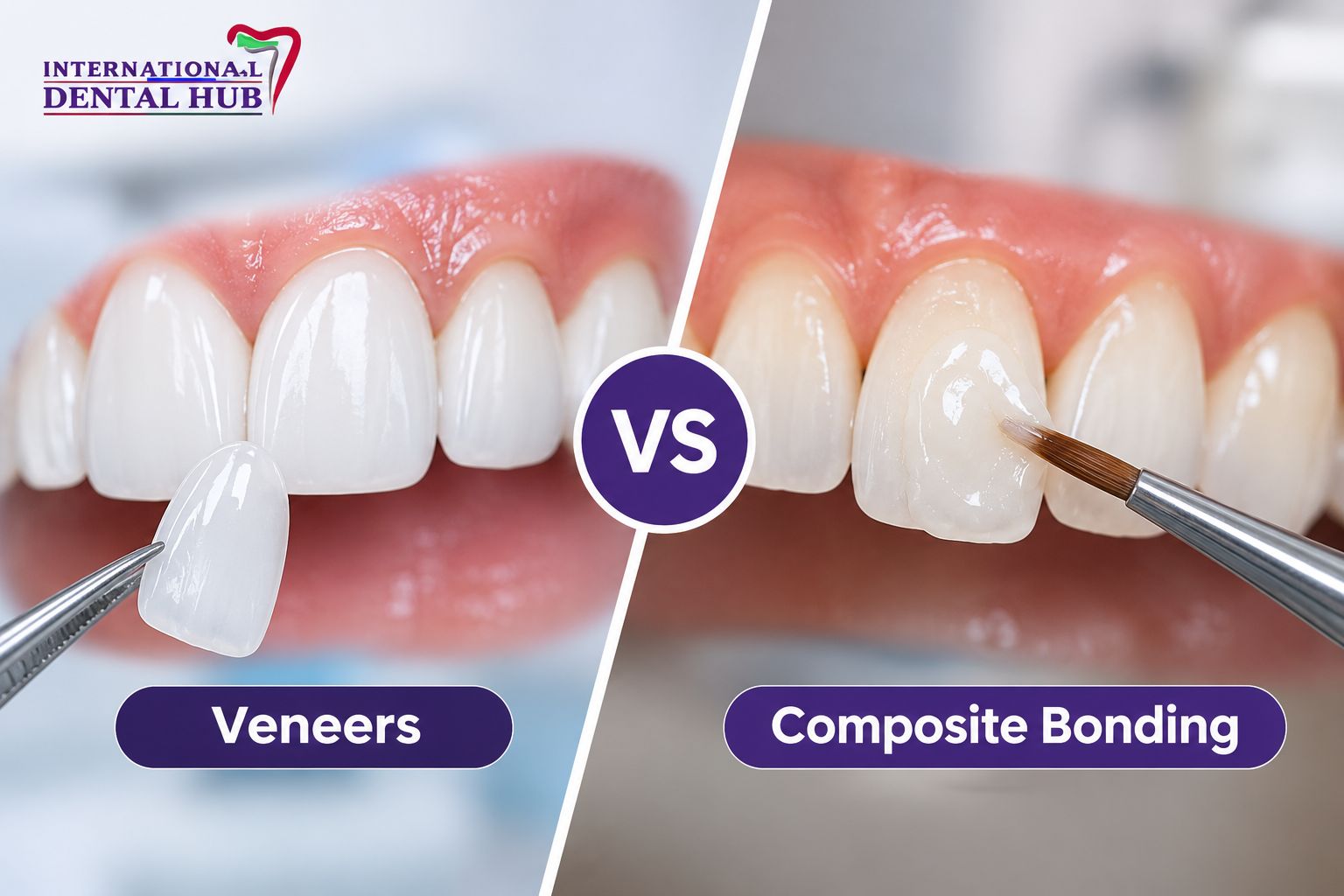
Composite bonding uses a putty-like, tooth-coloured resin. The dentist applies it directly to the tooth, shapes it by hand, hardens it with a curing light and polishes it. It is an additive treatment that usually needs no drilling.
Veneers are thin shells, usually made of dental porcelain, that cover the whole front surface of a tooth. Porcelain veneers are made in a dental laboratory from impressions or digital scans. Composite veneers are also available and are built chairside in a single visit.
In simple terms, bonding repairs or refines a tooth, while veneers redesign its entire front surface.
Veneers vs Composite Bonding at a Glance
| Factor | Composite Bonding | Dental Veneers |
| Material | Composite resin | Dental porcelain (ceramic) |
| Visits | Usually one | Usually two or more |
| Enamel removal | Little or none | Thin layer, in most cases |
| Typical lifespan | Around 3–7 years | Often 10–15 years with care |
| Stain resistance | Moderate | High |
| Repair | Easy to touch up | Often needs replacement |
| Cost per tooth | Lower | Higher |
| Best for | Small chips, gaps, minor reshaping | Full smile redesign, severe discolouration |
How Composite Bonding Works
Bonding is one of the most conservative cosmetic dental treatments. The process is straightforward:
- Consultation and shade matching. The dentist examines your teeth and gums, discusses your goals and selects a resin shade that blends with your natural enamel.
- Surface preparation. The tooth is gently roughened and conditioned so the resin can bond securely.
- Sculpting and curing. Resin is applied in layers, shaped by hand and hardened with a curing light.
- Polishing. The surface is smoothed and polished to match the shine of neighbouring teeth.
Most patients finish in a single appointment, and anaesthesia is often unnecessary unless bonding is combined with a filling.
How Veneers Work
The veneer process is more involved because each shell is custom-made.
Planning and Preparation
Your dentist assesses tooth health, gum condition and bite. A thin layer of enamel is usually removed so the veneer sits flush with neighbouring teeth. Digital scans or impressions then record the exact shape for the laboratory.
Fitting and Bonding
Once the veneers are ready, the dentist checks fit and shade before cementing each one permanently. Final adjustments ensure a comfortable bite. Because enamel does not grow back, porcelain veneers are considered a long-term commitment.
Appearance and Natural Look
Porcelain reflects light much like natural enamel, which is why veneers tend to look the most lifelike and stay bright for years. Composite resin can also look very natural in skilled hands, especially on one or two teeth, but it is slightly more porous and may dull over time.
If you want one uniform, brighter smile across all visible teeth, veneers deliver more consistent results. If you only want to correct a chipped corner or close a small gap, bonding blends in well and avoids altering healthy teeth. You can review real cases of before-and-after results.
Durability and Lifespan
Porcelain is harder and more stain-resistant than resin, so veneers generally outlast bonding. Composite bonding often lasts several years before it needs polishing, repair or replacement.
Lifespan for both treatments depends on:
- Teeth grinding (bruxism) or clenching
- Habits such as nail biting or chewing ice and pens
- Coffee, tea, cola and tobacco use
- Oral hygiene and regular dental checkups
- Bite alignment and the number of teeth treated
A protective mouth guard can extend the life of either option for patients who grind their teeth at night.
Cost Differences
Composite bonding is generally the more affordable choice per tooth because it is completed chairside without laboratory fabrication. Porcelain veneers cost more due to the ceramic material, laboratory work and extra appointments.
The true cost over time also depends on longevity. Bonding may need touch-ups or replacement sooner, while veneers cost more upfront but can last longer. The final price depends on how many teeth are treated and your dentist’s assessment, so the most accurate way to compare is a consultation. You can contact our dental clinic to arrange one.
Tooth Preparation and Reversibility
Bonding is usually reversible because little or no enamel is removed. Porcelain veneers are not, since a thin layer of enamel is shaped to make room for the shell. Anyone who wants to keep their natural tooth structure untouched often starts with bonding and moves to veneers later if their goals change.
Which Treatment Is Right for You?
Composite bonding usually suits:
- Small chips or cracks on front teeth
- Minor gaps between teeth
- Slightly uneven tooth edges
- Mild discolouration in a single tooth
- Patients on a tighter budget or wanting a same-day result
Veneers usually suit:
- Several teeth that need reshaping at once
- Deep stains that do not respond to teeth whitening
- Worn, short or uneven teeth
- Patients wanting the longest-lasting cosmetic result
Neither option fits everyone. Teeth with large cavities, weak structure or heavy wear may need dental crowns instead, and crowding or bite problems may be better handled with Invisalign or dental braces first.
Aftercare for Veneers and Bonding
Both treatments need the same basic care:
- Brush twice daily with a non-abrasive toothpaste and floss daily
- Avoid biting hard objects such as pens, ice and fingernails
- Limit staining drinks, especially in the first 48 hours after bonding
- Wear a night guard if you grind your teeth
- Attend a regular dental checkup every six months
Choosing Between Veneers and Bonding in Lahore
Patients across Bahria Town, DHA, and nearby areas of Lahore often come in unsure which treatment fits. A proper assessment looks at tooth health, gum condition, bite, and your smile goals before any recommendation is made. Our dental clinic in Bahria Town, Lahore can show you what each option will look like and explain the trade-offs honestly. Learn more about our clinic now.
FAQs
Which is better, veneers or composite bonding?
A dental examination determines which option fits your teeth. Bonding suits small, localized fixes and tighter budgets. Veneers suit full smile redesigns and offer longer-lasting, more stain-resistant results.
Is composite bonding cheaper than veneers?
Yes, in most cases. Bonding is completed in one visit without laboratory work, so it generally costs less per tooth. Veneers cost more upfront but may last longer.
Do veneers look more natural than bonding?
Porcelain veneers usually look the most natural because they mimic how enamel reflects light. Well-placed bonding can also look natural, especially for minor corrections on one or two teeth.
How long do veneers and composite bonding last?
Composite bonding often lasts around three to seven years, while porcelain veneers can last ten to fifteen years or longer with good care. Grinding, staining habits and hygiene affect both.
Does composite bonding damage teeth?
Bonding is considered one of the safest cosmetic treatments because it requires little or no enamel removal. Poor oral hygiene around bonded teeth can still lead to decay or gum irritation.
Are veneers reversible?
Porcelain veneers are not reversible because a thin layer of enamel is removed first. Composite bonding is typically reversible since the tooth stays largely intact.
Can you switch from bonding to veneers later?
Yes. Many patients begin with bonding and upgrade to veneers later. The bonded resin is removed or reshaped before veneer preparation, and your dentist will confirm if your teeth are suitable.
Is composite bonding painful?
Most patients feel little to no pain. Bonding on healthy enamel often needs no anaesthesia. Mild sensitivity may occur briefly, and veneers may involve local anaesthesia during tooth preparation.
Can veneers or bonding be whitened?
No. Neither material responds to whitening agents. Whiten your natural teeth first, then choose a veneer or bonding shade that matches the result.
Who is not a good candidate for veneers or bonding?
Patients with active gum disease, untreated decay, severe grinding or very weak enamel usually need those issues treated first. A consultation will identify the safest option.